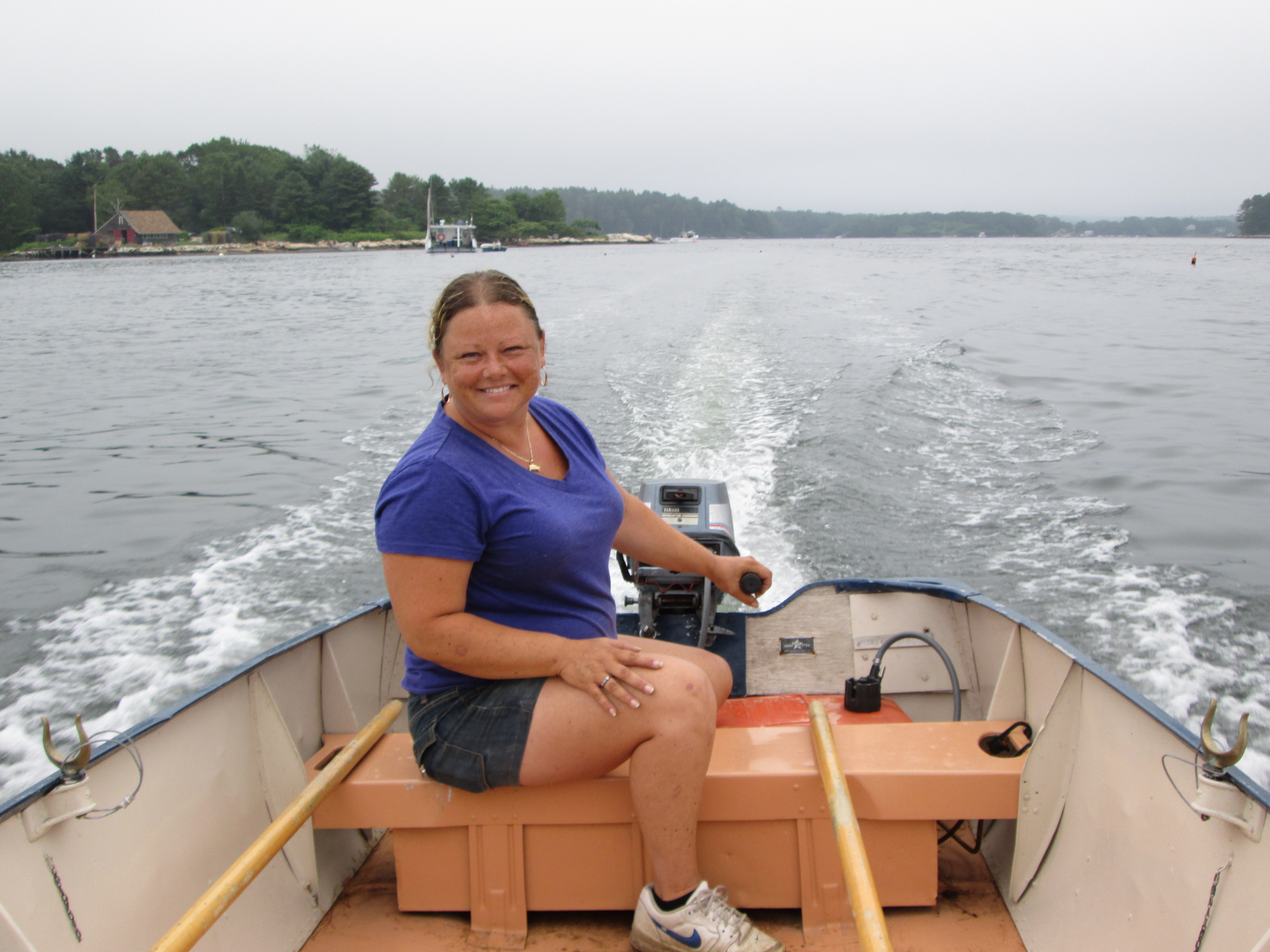
Operations Manager and President of the Maine Seaweed Council- Bonnie Tobey

Along with my siblings, Teresa and Greg, I grew up on Little Yarmouth Island, a private island that’s been in our family since August 5th, 1859. With no ferries, bridges, or nearby stores, we learned early on the value of resourcefulness.
We were taught by example to care for our belongings, to avoid littering, and to always recycle. If we spotted something in the ocean that didn’t belong, we would stop the boat to retrieve it—whether it was trash or something we could repurpose like blocks of Styrofoam or logs. My dad, ever organized, created a makeshift warehouse with a spot for everything, and it was amazing how often something from that collection would come in handy.
My mother was the heart of our home, growing all our vegetables and even making butter and soap. She had one of those big cast iron cook stoves where she’d bake bread and boil vats of maple syrup in the spring. Our power was wind-generated (and still is, now supplemented by solar panels). We raised chickens, had a cow for milk, and once attempted to raise pigs—but when the time came to slaughter them, we realized the challenges of being fully self-sufficient.
Our parents taught us by example how to value and care for the resources we had. Growing up, I never thought of seaweed as anything more than an obstacle to swimming or something that got caught in the boat’s propeller. It wasn’t until later that I realized seaweed would become central to my career.
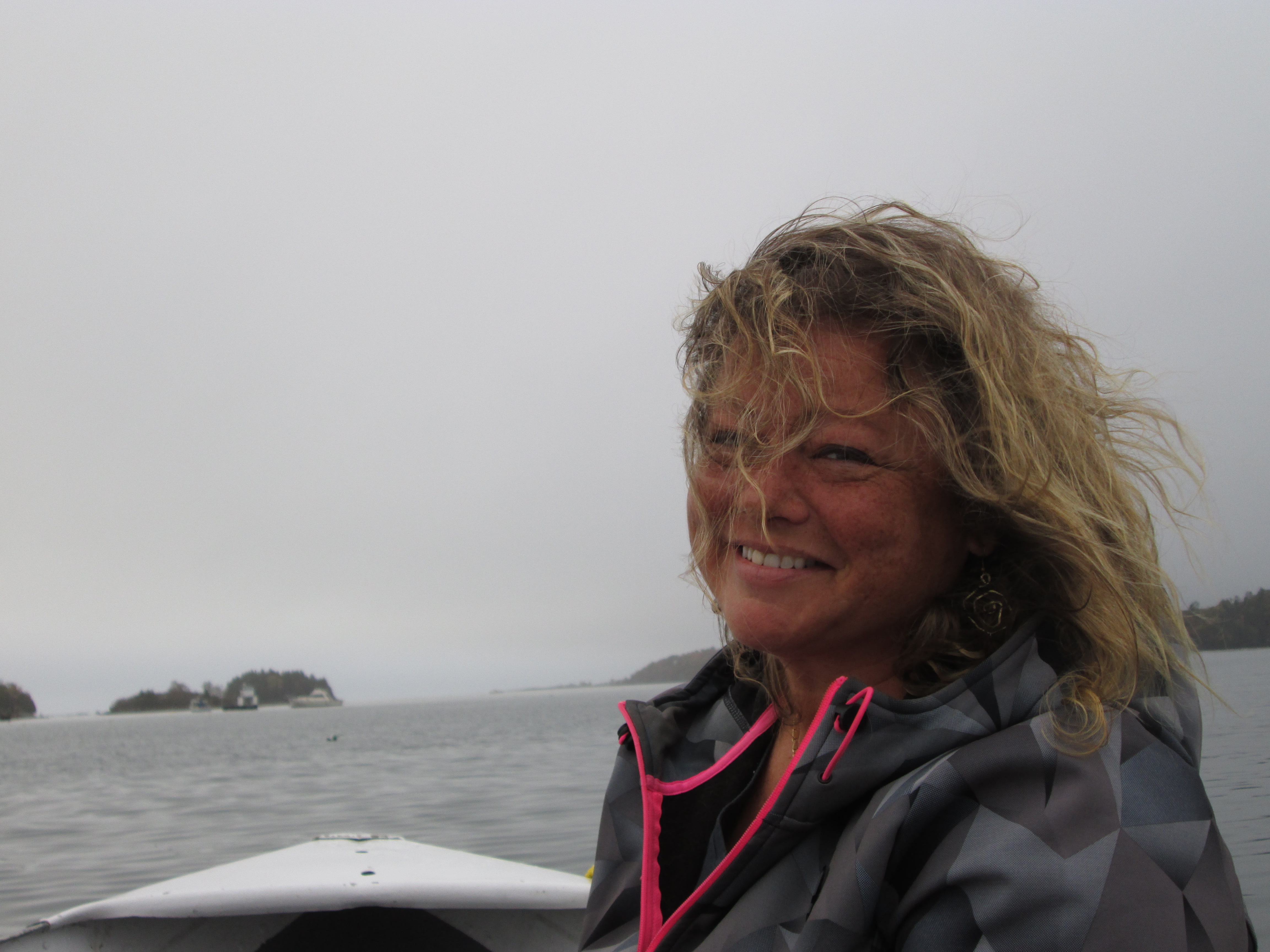
Today, my brother and I run Source Maine, one of the largest seaweed businesses in the state. Since 1975, seaweed has been our business. I serve as the Operations Manager, and my brother is the General Manager, but we both get hands-on with the harvesting when needed.
We use two mechanical harvesters that often catch people’s attention. They look unusual to those unfamiliar with them, and we get a lot of questions—some from curious onlookers and some from people concerned about the potential environmental impact. I understand these concerns, but I can confidently say that very little besides the occasional periwinkle or broken clam shell gets caught up in the harvest. The machines are designed to leave the seaweed’s lateral branches intact, ensuring the plants can continue to grow. Part of my role is to photograph and measure the harvest area before and after each season, and I’m always amazed at how quickly the seaweed rebounds and thrives. It’s like tending to plants, in a way—pruning and harvesting it properly ensures it remains strong and nutrient-rich.
I’m proud to be a part of Maine’s seaweed industry and to serve as President of the Maine Seaweed Council. By caring for this valuable resource, we’re able to benefit many people through our work, while also ensuring there will be plenty of seaweed for future generations to harvest.